Thursday, 26 May 2016

Woolston and Connah's Quay

Oh lordy - I am so far behind now (more than a month) that I seriously considered allowing this blog to die... but after a mammoth photo-filing session last night I've decided to try to revive it. So - here are photos from a weekend Up North in mid-April - a Saturday at Woolston Eyes and a Sunday at Connah's Quay and RSPB Burton Mere. The Saturday was sunny, the Sunday really really wasn't, at first, though did brighten up later. And I was using a new (to me) camera - Nick's D300s (with my usual birding lens attached). The D300s is a pretty minor upgrade from the D300, so it wasn't that weird for me, though I forgot to check the date setting and the camera thought it was January.

So Woolston first. A beautiful and ringed Chiffchaff on the walk to the main hide. There was ringing going on at the reserve when we arrived, with tape-luring. Luckily we figured this out and did not tick off the singing Wood Warbler, Grasshopper Warbler and Yellow-browed Warbler...


And from the main hide, a couple of Black-necked Grebes on view... but sadly distant.


Another distant delight - first-winter Little Gull, who's been here for a few weeks.


On walkabout round the rest of the reserve - this corking Peacock. There were a fair few Peacocks and Small Torties around, enjoying the sunshineyness.


We then went for a walk down a different part of the reserve. This was most lovely - much of it along an embankment bordering what looked like a really excellent patch of scrub, ideal for Grasshopper Warblers (and indeed N found one or two there on a subsequent visit). No Groppers for us on this occasion but ample compensation came in the form of this beautiful male Redstart.

And now on to Connah's Quay, the Deeside reserve just over the border into Welshlands.


From the main hide, highlights were baby bunnies making tentative forays from their burrows, and hirundines (all three) skimming over the pond. Also a Common Sandpiper patrolling the pond margins. The muddy marsh was quietish, just Shelducks and Oystercatchers to-and-froing.

We set off along the path, finding Wheatears in the fields and this distant dingy Whinchat on the riverside.

We met no other humans on the path today, just this Fox.


The other hides produced very little. Here's a Common Sandpiper on patrol, and a lovely first-summer Black-headed Gull.

 An irresistable Robin posed for me on the walk back to the car.

Done and dusted earlier than expected, we decided to call in at Burton Mere on the way back.

While Nick unearthed a few Spotted Redshanks from the wader flocks in front of the visitor centre, I was outside trying to phtoograph the House Martins skimming over the water. I failed, though the Black-tailed Godwit's slower speed and larger size made it an easier target.

We walked down to the far hide and watched Avocets, more godwits, a pair of Dunlins and assorted ducks. A raptor put up all the waders back at the visitor centre, and these godwits flew over, accompanied by their Ruff friend.

Avocets and Black-headed Gulls were also put up in the kerfuffle. I bared glimpsed the raptor responsible but the visitor centre folks confirmed it had been a Peregrine.

A couple of Oystercatchers trying to land on the island without crashing into each other.

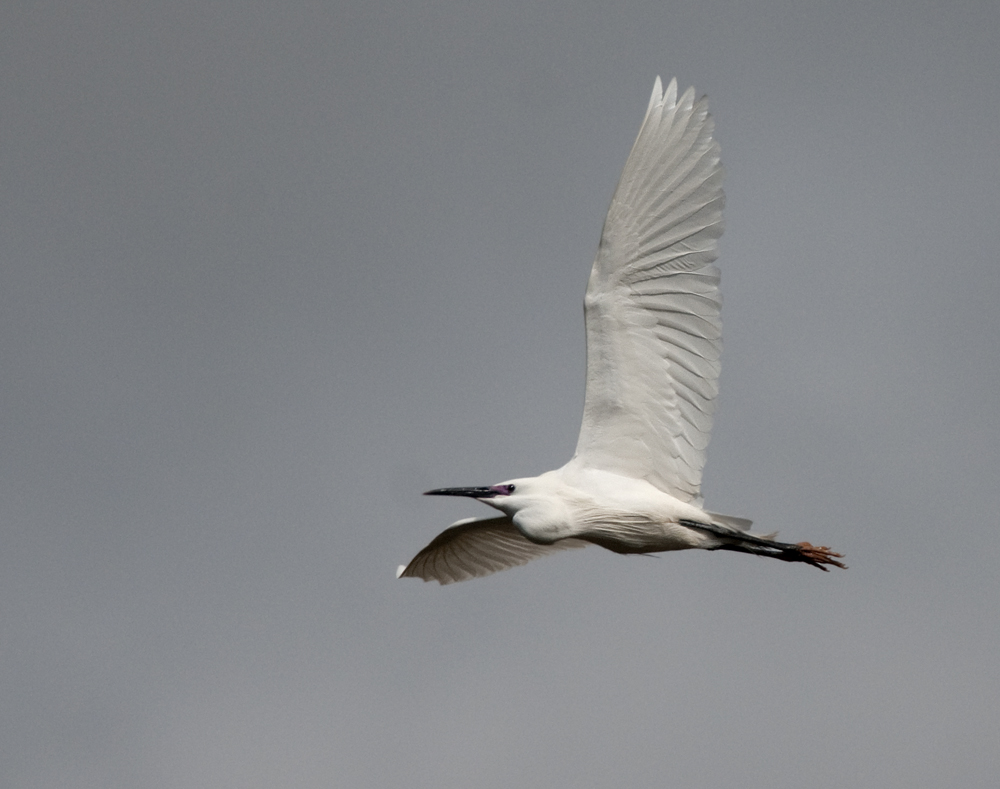
Little Egret - a flyby against a very moody sky.


On the walk back, a couple of little 'uns showed nicely - this Wren...

... and a pair of Robins courtship-feeding.

Friday, 6 May 2016

Spring on Havergate

I'm so far behind with the blog. And have three more outings to post about after this, but I'm going away today, so I'm just doing this one post and in great haste. Blame proper work...

This one's about Lisa and I returning to Havergate Island, on April 16th. It was, unfortunately, a bitterly cold and slightly rainy day, and the exciting hare activity we hoped to witness was NOT happening. Still, we had a good day and did see a couple of hares, plus a few nice birds including a distant Short-eared Owl and an extremely ringtail Hen Harrier. The island has a LOT of pairs of Herring and Lesser Black-backed Gulls and I pointed my camera at them more than anything else. Some photos!


Saturday, 2 April 2016

Firecrest-fest at Dunge

On Easter Sunday, Nick and I went to Dungeness, lured there by the promise of a whole lot of Firecrests. It was a bright (at first) but very blustery day. We kicked off at the obs and were soon seeing Firecrests aplenty, darting in and out of the scrub. We then went down to the lighthouse garden and saw a bunch more.

Here are two of at least six that were bouncing about on the lawn like tiny, colourful thrushes. This garden is very sheltered, so a good place for them to hang out while they wait for the wind to drop before making the sea crossing back home (presumably!). Getting pics was really difficult, which is why this pic is so rubbish.

We then walked down to the patch. On the way Nick found this lovely male Wheatear in the little vegetated strip between the path and the power station. It was very flighty...

... not helped by the fact that it was being harrassed by a couple of Pied Wagtails. Here's one of those, falling off the wall.

There wasn't a lot happening offshore. The patch was, as usual, gull-filled, but neither of us could pick out anything out of the ordinary.

The only other action was a series of skeins of Brent Geese going by. So we went back to the reserve.

The first few hides produced nothing in particular - the usual array of dabbling ducks, Cormorants busy nesting, that kind of thing. Then a hirundine came through - a Sand Martin.

It was Dengemarsh hide that proved the winner for us. On the very far bank there were a small group of Barnacle Geese among the Greylags.

Then three more Greylags flew in, except one of them wasn't a Greylag, it was a Tundra Bean Goose.

Nick asked me to look at a very distant white bird hunkered on the far bank behind a bush. I could see no useful details and thought it was probably a domestic Greylag. We left the hide, but Nick continued to wonder about this bird and we decided to go back and try for a clearer view from the other end of the hide. We could indeed see it a bit better from here, and after much staring and me taking dozens of photos of it, realised that in fact it was a Spoonbill, and we were glad we'd returned.

So with the Firecrests, Sand Martin, Wheatear, Barnacle and Bean Geese and Spoonbill, plus the Water Pipit and scoters from Rainham and the Woodlark from Broadwater Warren, the Easter weekend brought me nine year-ticks and advanced my list to 139. It brought Nick 10 year-ticks, because Chiffchaff was new for him (we heard them at all three places, but I forgot to mention them til now, and he's on 140. NOT that we are competing. Much.

Two last birds from the Dengemarsh hide - a lovely pristine Common Gull, and a Cormorant carrying nesting material. We were caught in torrential rain and hail on the walk back to the car, but we didn't really mind.


Broadwater Warren and no photos

Easter Saturday was MISERABLE - drizzly and very grey. My camera stayed in its bag all morning as Nick, James, Imi and I walked around Broadwater Warren RSPB (near Tunbridge Wells).

I often just don't blog when there are no photos, but I thought I would this time. This site is somewhere I used to visit often, when I lived in Groombridge (it's walking distance from there). Once a rather neglected conifer plantation, it's now being 'RSPB-ed'. There's much evidence of ongoing management - regeneration of heath, some new ponds, well-marked trails and boardwalks, and signs saying 'ground-nesting birds - please keep dogs on leads', which were largely being ignored. There was also a sign saying that thanks to RSPB work 'nightjars had returned' which amused me because the Nightjars have been here all along... but the RSPB are obviously working very hard to improve habitat so I shall forgive them.

We'd come in the hope of Woodlark, and very soon we did hear one singing, though it was way off in a no-entry area so we couldn't try to get a look at it. Lovely to hear, nonetheless. The feeding station in the car park was attended by Siskins as well as the usual tits and whatnot, and there were also Siskins singing around the place, so maybe they will breed here. The open bits held several Stonechats including singing males so they are getting down to business too.

That aside, the birds we saw/heard were mainly the usual woodland stuff. Great Spotted Woodpecker, Nuthatch, lots of Coal Tits, Grey Wagtail down by the (lovely) Decoy Pond, Common Buzzard overhead. The new trail is quite lovely (if muddy), with a particularly lovely loop through a stand of mature pines that had 'crossbills' written all over it (though sadly no actual Crossbills) and the open heathy areas bristled with Whitethroat potential. There are allegedly Yellowhammers here though we didn't see any. The new pools looked the business for Odonata as well, and with time/maturity I'd be hopeful of the likes of Golden-ringed Dragonfly, Keeled Skimmer, Black Darter, Brilliant Emerald and Small Red Damselfly here.

Hopefully I'll get the chance to come back on a sunny day in summer, and look for Nightjars/Woodcocks, plus all the other nice things that might be about in the daytime.

Rainham and Sevenoaks

On Good Friday, the sun shone and it was lovely, and Nick and I went to Rainham Marshes in the morning and Sevenoaks Wildlife Reserve in the afternoon. Things got off to a good start when we arrived at Rainham - some of the staff were on the far side of the drawbridge (it was pre-opening time) scoping the river, and pointed out a small flock of Common Scoters.

Here they are. Far, far away but you can see what they are (I hope) - can see a couple of sticky-up tails, at least.

We ambled down the river and back, in time for opening, not seeing terribly much on the way but it was such a lovely sunny morning that it didn't matter.

We settled down in Purfleet hide and started trying to find the Jack Snipe that had been there of late. We couldn't, nor could anyone else. There was a bit of compensation though when a small beige-ish grey-ish bird dropped in and revealed itself to be a Water Pipit. Otherwise, here were the usual dabbling ducks (numbers clearly dwindling now) and some Redshanks and Lapwings that were gearing up for the breeding season.

The MDZ was stuffed with people poking their lenses through the mesh at a Kingfisher perched close to the nesting bank.

The rest of the open areas produced much what you'd expect - Marsh Harrier at the far end, Reed Buntings... all over, a few more additions to the day duck-list. When we got to the sheltered woodland we added a couple of butterflies - Peacock and Brimstone.

The feeding station back at the centre was oddly quiet, perhaps because of these two miscreants.

We went back to the Purfleet hide for another try for the Jack Snipe - no joy again. Instead, here is a selection of male dabbling ducks showing off their backsides. I have not seen a Pintail from here before, so that was very nice.


Gadwall, Pintail, Shoveler.


And as we left this hide, the female Kingfisher decided to provide me with a brief photo opportunity.

As it was still very much daytime, we called in at Sevenoaks Wildlife Reserve for a couple of hours in the afternoon.


A couple of early spring insects enjoying the sunny weather - Hairy-footed Flower Bee and Bee-fly.

We wandered down to Tyler hide and enjoyed views of Black-headed and Common Gulls, Teals and other ducks, Great Crested Grebe, Lapwings, you know the deal... then a Sparrowhawk came blazing over the Serengeti and up over the hide. I thought that was that, but then a chap who'd just left the hide came back in to say the Sprawk was perched in clear view outside, so I went out for a look.

Sprawky McSprawkface. I think after much deliberation that this is an adult female, with a bit of a rusty tinge here and there as mature females often have - what you can't see from the photo is how big she was.


We carried on down to the Sutton hide and then the Slingsby hide. Not a lot on the water (though there were four distant Wigeons - unusual for them to be here rather than Snipe Bog Lake) but these two little ones showed at close range from Slingsby, also a very dark female Reed Bunting who I didn't manage to photograph properly.

We went up to Willow hide to end the day. From here, not much to see. Intriguingly there was what looked like a tern raft out on the water - surely not for actual terns? I've hardly ever seen them here... There were numerous Canada Geese on the water and watching them perform their somersaulting ablutions was most diverting.