Wednesday, 24 April 2013

A week in Sri Lanka - part 1

Blimey, where to start? I had the very good fortune to be invited on a short-notice work trip to Sri Lanka, and there followed a week of incredibly full-on wildlife-watching, taking in central wetland areas, rainforest in the south-west, and some fun on the southern coast. I have absurd quantities of photos so this will take several posts... I'll begin with some wetland birds.

Whiskered Tern, common both on the coast and inland. This one's in breeding plumage but many were in winter plumage.

White-breasted Kingfisher. The most common kingfisher, we saw them everywhere, often on overhead wires and roadside posts. Also saw one Common Kingfisher, and one Asian Dwarf Kingfisher, the latter sadly a window collision casualty.

Indian Pond Heron. This streaky, white-winged little heron was very common on all kinds of wetlands, especially paddyfields.

Purple Heron. Only saw a couple of these, and not at close range.

Purple Gallinule aka Purple Swamphen, or as it was introduced to me by our guide, 'Purple Coot'. We can agree at least that it is purple. Only saw this one, on marshland near Dambulla.

Red-wattled Lapwing. Quite common, prone to noisy flypasts. They sound like terns.

Black-headed Ibis. One of the scarcer long-legged wading birds on the paddies and marshes.

Little Egret. Quite numerous, more so than Great White but less so than Cattle.
Indian Cormorants. We saw plenty of these by open freshwater.

Cattle Egret, inspecting the cattle. Very common everywhere. A different subspecies to the ones in Europe, with brighter buff bits.
Not strictly speaking a wetlands bird but we did see all our Peacocks in fields around the marshland.

White-breasted Waterhen. Very Moorhen-like in its mannerisms, and very common. This one was on a roof at one of the hotels.

Monday, 8 April 2013

Flights of fancy

On Saturday afternoon, Rob and I went to Oare Marshes to give the lenses some much-needed exercise. We didn't have very long there, but it was long enough to enjoy some glorious sunshine (if not temperatures to match) and to take a few bird photos. The flood was pretty quiet but a range of birdlife came and went over the hour or so we were watching.

There were a couple of dozen Avocets about, mostly loafing and roosting, but a few were active around the small central islands, perhaps thinking about nesting.

Duck and drake Gadwall. One of four or five pairs around.

There was a sizeable Starling flock roaming around. This one got itself mixed up in the wrong crowd, teaming up with a double-figure Lapwing flock that went from west to east over the flood.

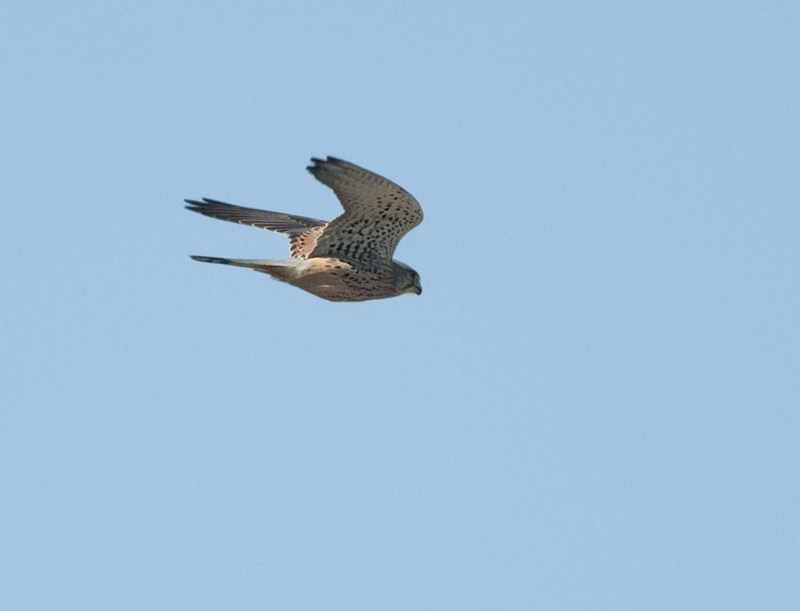
Not a great raptor day. A Sparrowhawk caught  the attention of local corvids and was chased away, then later this Kestrel paused to hover over the rough fields.

When I wandered down to the shore (to see many Grey Plovers, Dunlins and Curlews far out on the mud) I missed the arrival of a flight of juvenile Mute Swans. On the fields west of the flood were a couple of pairs of adult Mutes, including this bird.

Lots of Mallard activity today, drakes ganging up to chase unescorted ducks to try for last-ditch mating opportunities before all the females are on eggs.

I found two pairs of Pintails, one on the main flood and the other on a smaller pool west of the road. All were too distant for good photos - this flyby was the best opportunity.

A Redshank whirred over in a curiously stalling flight, all the time piping loudly. Territorial behaviour - good to see a proper sign of spring. There were also many Meadow Pipits songflighting up and parachuting down over the meadowland.

We saw almost the full complement of Britain's breeding dabbling ducks today, only Garganey was missing. This Shoveler was flying a circuit over the flood with his mate, who didn't make it into the frame of this photo.

Something flushed this Snipe, which grunted crossly as it flashed away.

I know almost nothing about planes but even I can recognise a Spitfire. Always nice to see one of these iconic old fighters.

To finish, a boring Canada Goose, but one of the better flight shots I've managed of this species.

Friday, 29 March 2013

An afternoon in Regent's Park

Yesterday I went to London to meet a couple of fellow RSPB forumites and to look at the birds in Regent's Park. It was SOOOO cold, even here in the city where things are usually a little warmer, but the threatened rain didn't happen. We didn't see anything out of the ordinary but it was ace to meet Hazel, Mike and Paul, and the birds that were about were on good form.

After leaving the cafe we found a group of grazing geese which included Bar-headed, Barnacles, Greylags, Canadas and this hybrid bird. I thought it resembled the Bar-headed x White-fronted Goose from St James's Park, but not sure it's quite the same. I had a google and found a couple of photos of the same bird, but no definite view on its parentage. It is free-winged and according to this excellent blog apparently associates with the (also free-winged) Bar-heads, arriving with them in spring, staying a few months, and leaving again for the winter.

Many of the Tufties on the boating lake were paired up. These two looked a little unhappy at being scrutinised...

... unlike these exhibitionists.

Also very active in the reproductive department were the Grey Herons, many of which already have well-grown chicks in the nest. The young birds were making a right racket.


There were ample chances to practice flight shots as the adults came and went, some still augmenting their colossal stick nests. Pity about the leaden skies.

Regents Park squirrels don't seem quite as in-your-face as their Hyde Park brethren. This one demanded nuts with menaces though. Others we saw were collecting leaves and stuff to furnish their dreys.

Near the road bridge were a couple of breeding-plumaged Little Grebes, and a third that was still in its winter gear. There were also a couple of Great Cresteds.

Furtive Blackbird. Small passerines weren't much in evidence today but did include Robin, Dunnock, Wren, Long-tailed, Great, Blue and Coal Tits and Goldcrest.

A couple of vigorously bathing Greylag Geese provided some amusing moments, as they performed forward rolls and other aquabatics.


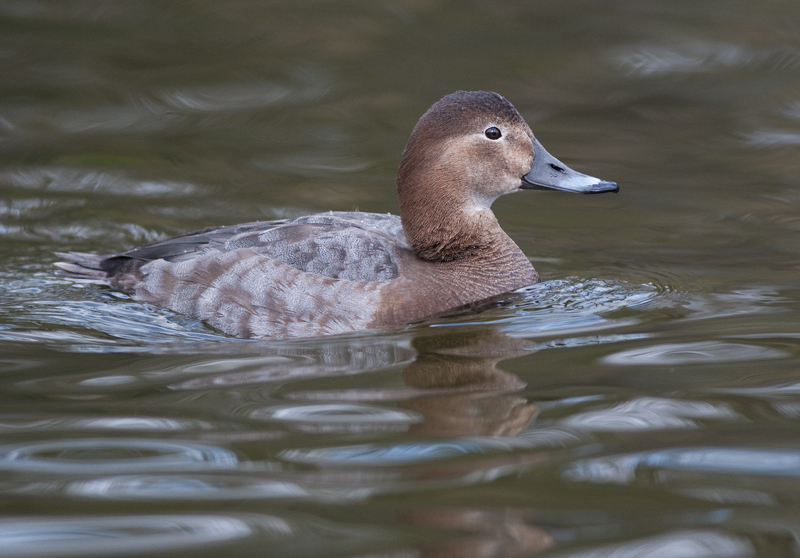
Pochards are as numerous as Tufties on this lake. Unlike their congeners they don't seem to have paired up, and there were plenty of chases and scuffles among the males.

Presumably at least some of the many adult Black-headed Gulls here will be departing for their breeding grounds sometime soon. The very cold weather must be affecting the timing of breeding behaviour in many species.

Egyptian Geese with white faces are not that uncommon and can cause confusion. I've heard the 'h' word bandied about in reference to such birds but I don't see anything about this one to suggest the influence of another species, and I'd say it's a pure Egyptian Goose with leucism.

Wednesday, 27 March 2013

Hastings happy hour

I stayed overnight in Hastings at my dad's on Tuesday, and as Wednesday morning dawned fine and sunny (albeit pretty freezing cold) I decided to nip down to the seafront to see the Fulmars before we hit the town centre to do the shopping.

As I walked down Rock-a-nore Road, I could hear Fulmars cackling from the cliffs above. In the very sheer cliff face adjacent to where the East Hill funicular lift goes up to the top of the East Hill, there were several Fulmars tucked into hollows in the rock.


I stood in the car park at the end of the road and took a few flight shots. Their numbers seem to be up on last year. I noticed one bird waving its feet around as it flew, and was also struck by how little the feet are.

There were a number of gulls loafing on the beach. Here's a Great Black-backed showing how much bigger it is than its Herring minions...

... and this is also a GBBG, a youngster in first-winter plumage. Although it was quite windy, the wind direction must have been such that it flattened rather than whipped up the sea, no nice dramatic wave action today.

A Herring Gull approached, carrying a whelk. It had a particularly awkward grip on its prize, holding it vertically, which forced it to have its bill open very wide.

Whoops, dropped it...

... or maybe the dropping was on purpose, to break the whelk on the stones below.

The gull very athletically followed the plummeting gastropod.

The whelk did not break on impact, or not visibly so at least. The gull collected it, in a more comfortable grip this time, and carried it away.

This gull also seemed in playful mood. I watched it slide all of the way down this rooftop.

A good-looking adult Cormorant came in off the sea and flew along the base of the cliffs (which are covered in scrubby vegetation).

After this I walked up Tamarisk Steps and on up to the top of the East Hill, only to find that my favourite viewpoint over the town was blocked off, being full of fence panels and bits of tree. This was disappointing. I walked along looking for another good viewpoint but didn't find one. A few little flocks of Meadow Pipits went over.

Going back down the steps, I noticed a Raven over the Old Town, and grabbed a few rubbish photos before it headed off in the direction of Fairlight.

On the walk back through the Old Town to dad's I noticed this rather odd-looking Feral Pigeon so took a picture of it. And how about that blue sky?

I staked out dad's garden for a little while when I got back, hoping for more Ravens, but no luck. It looks like the nesting Blue Tits are back, I was roundly scolded by this one and its mate when I stepped outside.

Wildcat! Oh, alright, a tamecat. She was climbing up a roof opposite dad's garden, a roof that has its own nesting Herring Gulls although they were out at the time. I imagine the gulls would give the cat short shrift if they caught her up there.