Thursday, 30 August 2012

Two hours in a hide

The ex texted yesterday morning (yes, we're still on speaking terms) saying he was at Sevenoaks Wildlife Reserve, enjoying a total Kingfisher fest from the Willow hide. He sent photos later for confirmation (and very nice they were too). So that's where I went this morning, setting off at about 5.30am under a still dark and unsettled sky.

I went stomping down the trail towards the hide in one of those agitated thought-storms that stops you from noticing anything around you. When I realised this was what I was doing I forced myself to slow down and take my time (I still saw no birds to speak of though). The hide was empty so I positioned myself at the end nearest the Kingfisher sticks and waited.

Late August has, in past years, been pretty good here, with Grey Wagtails and Green Sandpipers prancing about on the mud right in front of the hide. This year, though, the water levels are still high and there's no exposed mud. On the water, a dozen each of Mallards, Gadwalls and Coots, the resident Mute Swan pair which seem to have had total breeding failure this year, a few Moorhens, a pair of Tufties.

I settled in for a long wait. About 20 minutes in, a Kingfisher flew by at close range, then it or another returned the other way some 10 minutes later. Then the same or yet another approached from opposite me and landed on the more photogenic of the two perches. I took a couple of shots, and then it flew and that was it for Kingfisher action.

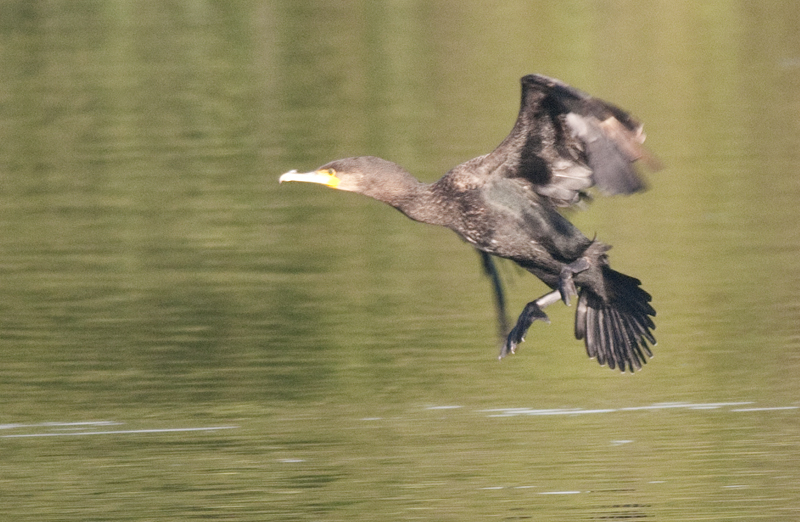
I stayed put anyway. It was pleasant - the sun gradually rising behind me and lighting up first the treetops and then the water and making everything look very lovely. Flyby birds included Jay, heard-but-not-seen included Long-tailed Tit and Great Spotted Woodpecker, and a Grey Heron and a Cormorant joined the water birds. No mind-bending excitement, just two quiet and peaceful hours with a few old friends. Here's a few photos...


Sunday, 19 August 2012

Last ditch damsel

I was looking at Howard Vaughan's blog on the RSPB website the other day. For those who don't know, he's the warden at RSPB Rainham Marshes, and he is a very prolific blogger. One recent post showed Small Red-eyed Damselflies, which are on my 'haven't seen yet' Odonata list. I hadn't realised the species occurred at Rainham, and decided I would go ASAP to see them. I emailed Shane and Graham to see if they fancied coming too, and they both did - we agreed to have a day there on Thursday 16th.

So we met at the visitor centre at opening time and headed out onto the main trail, going anticlockwise for a change. It was pretty warm but there was rain in the air, and it was breezy. I was concerned that this would keep the damselflies tucked away out of sight but held out hope that things would improve later on.

Rainham is replete with luscious flora at the moment. This first bit of trail is lined with beautiful Chicory - my photo doesn't do its lovely blue colour justice.


From the start we were accompanied around the trails by darters, both Common and Ruddy. The top pic shows a male Common, the bottom a female Ruddy. They frequently rested on the boardwalks and handrails, drawing warmth from the wood.

We were near the Peregrine pylon when a raptor came fast and low over the marsh. It wasn't the Peregrine though but a Sparrowhawk. I was willing it to turn around and head back our way, and happily it did, wheeling directly overhead and causing three cricked necks.

On we went, noting little birdlife (the pick of it a Black-tailed Godwit on the edge of one of the shallow pools). The constant racket of Reed Warbler song that followed us around on our last visit was silenced, though we did see the occasional Reed Warbler scooting across a gap in the reeds. The Ragwort clumps held a few well-grown Cinnabar caterpillars. This one had left the Ragwort and looked ready to pupate.

At the far end of the reserve, we found a big stand of Buddleia, which had attracted several 'aristocrat' butterflies - a Peacock, a few Red Admirals and some Small Tortoiseshells, including this one. The bush and its blooms were being buffeted quite violently by the wind, which didn't seem to annoy the butterflies nearly as much as it annoyed the photographers.

Can't remember where we were when I took this pic of a blue-form female Common Blue Damselfly. Pretty girl, isn't she? From above, not so attractive as the abdomen is black along the top.

I also can't remember where it was that we saw this Common Lizard, except that it was definitely on the return stretch of boardwalk. There were two of them, and with care and patience we got close enough for photos without freaking them out.

Aw. This was one of four Little Grebe chicks we found swimming about (and squeaking noisily) in a reed-lined channel alongside the main trail.

We hadn't had much luck with any of the hides until we reached the last one, which is also my favourite (though its huge windows probably discourage the wildlife from getting too near). Graham found this Whimbrel pottering about by itself a long way from the hide, hence heavy crop.

Crossing the last bridge, I clocked a damselfly skimming the water, and after a bit of staring we found several, many coupled up and egg-laying. We could see they were some kind of red-eyed but I had to check the photos to confirm that we'd found our target - the black X at the abdomen tip makes this a male Small Red-eyed Damselfly. Happy days!

We went into the centre and had tea and cake, then took a short extra walk along the trail clockwise as far as the one-way crossing to the riverside path, and made our way back alongside the Thames. On the way we were entertained by this Kestrel, which at one point very excitingly swept right over our heads at more than frame-filling range. Sadly my extreme close-ups are blurry, so this is all I can offer.

Flowers for Dianne

Sorry for the long time no post situation. I am back in my flat in Sevenoaks but haven't got internet yet... and won't have for a few more days. So I'm writing this from Michele's house.

On Tuesday last week Dianne came to see me and we went on a plant-hunting walk. Dianne's interested in medicinal plants and has lots of knowledge, wheras plants and I have never really hit it off that well.... Between us we IDed most of what we encountered, and it was a pleasant novelty to focus on the green stuff and pretty much ignore birds/insects for a change.

Rosebay Willowherb. I actually photographed this a few days before but thought I'd include it here as we were discussing the differences between Rosebay and Great Willowherb (sadly I forgot to take a pic of the latter). There is a fine stand of this growing in front of Willow hide, and somewhat blocking the view of the very few wildfowl on the lake beyond.

This one is Angelica, a new plant for me (by which I mean one I hadn't noticed before). Very attractive it is too, with its balls of tiny white flowers. We saw other umbellifers including the rather small Yarrow (ETA - not an umbellifer but a daisy - thanks Greenie!) with its much-divided, thread-like leaves, and Hogweed (or was it Giant Hogweed - ETA - probably not, see Greenie's comment below) - very big, rather ungainly beast.

We IDed this fabulous-looking flower as Orange Hawkbit. Gorgeous colours and smart square-cut petals make it a real stunner.

OK, so I didn't completely ignore the insects. This flying flower is a Comma, which rested on a leaf as chiselled-looking as its own wings. I did get a closer shot of a different one, but I actually like the more distant pic better...

Comma the second. Bigger but more boring, in my opinion.

Some of the plants that we didn't know but figured out from our field guides were: Self-heal (mint family, short stem, cluster of purply flowers at the top), Black Horehound (another mint, longer-stemmed with small purple flowers all up the stem), Hemp Agrimony (big shrubby thing with big heads of curiously furry little pink flowers) and Water Mint (another pink fuzzy thing, but little, with the flowers in a short, rounded spike).

And a final attempt at artyness - a very noisy low-light shot of some thistledown blowing across the car park as we were leaving, the sun having long departed.

Thursday, 26 July 2012

Dungeness heat haze

Dungeness heat haze - a good name for a band, no? Having arranged a trip to Dunge with Phil Sharp (see his ace blog here), I got up super-early to get my run out of the way before it got too hot, and was treated to the sight of a trio of fledgling Kestrels wheeling around the church tower, making a LOT of noise. Back at the cottage, I spent a little time in the garden photographing butterflies.


From the top, Meadow Brown, Red Admiral and Small Skipper. The Gatekeepers are also coming out in force now.

Phil arrived at 8.30 and we set off for Dungeness, kicking off with a look around the main reserve. We weren't expecting much bird-wise but hoped to find plenty of insects enjoying the stillness and heat.

The place is full of flowers which, in turn, are pulling in the insects. Here's a Brown Argus which led us a merry dance before finally deigning to sit still for a few moments.

We were dead right about the birds. Very little on the wing, apart from large parties of mostly juvenile Starlings. A big flock of Lapwings went over at the end of Burrowes Pit and I took photos, focusing on one random bird as they got closer. Unfortunately I picked the scruffiest Lapwing known to man.

This one is an Essex Skipper. Very similar to the Small Skipper above, and you need to see them from this sort of angle to see the difference - look very carefully and you'll see that the Essex Skipper is wearing tiny white stilettos. But if the stilettos have fallen off then check the antennae tip undersides - red-brown in Small, black in Essex. There are other little differences too but the antennae one is probably the easiest/least subjective.

We stayed on the trail to Denge Marsh hide then took a left and followed the public right of way to Springfield Bridge, alongside the river. A lovely walk, this, and it produced a few Six-spot Burnets and this confiding Corn Bunting. At the bridge, we saw a very white-crowned female-type Marsh Harrier over Denge Marsh, and in the river a mini-Pike (the little ones are called 'jack' Pike, as Phil explained).

We retraced our steps from the bridge and were soon back at Denge Marsh hide, noting this Marsh Frog lurking in the ditch beside the hide.


It was lovely and cool in the hide and we made a lengthy stay, entertained by the many Common Terns that were on the rafts or flying about nearby. They were feeling the heat - I saw several taking mid-air dip baths but didn't manage to get any shots of it. On the raft in front of us there were at least two small chicks.

A Black-tailed Godwit flew briskly over the water - one of two seen today.

Linnets were ever-present and as photographically unhelpful as usual. This was the best I managed.

The last stretch of trail between Denge Marsh hide and the car park proved best for dragonflies. There were many Ruddy Darters about, a few of which posed for photos. Less cooperative were the big 'uns -  we saw Emperors, Brown Hawkers and Migrant Hawkers. Common Blue Damselflies were also numerous.

Over the road to the ARC pit. We went to the viewscreen first, and again it was nice and cool here. Not that much to see though. This Little Egret provided a few minutes of diversion, while nearby was a crestless young Lapwing, a few Linnets dropped in, and further out were Pochards, Tufties, gulls and Cormorants.

Heading back, Phil remarked on how the loafing gulls on the shingle bank were quite unworried by our walking past quite close to them. Of course, the moment we stopped, the gulls started looking worried and shuffling away. This Common Gull and Black-headed held their ground and provided a nice size/shape comparison into the bargain.

We finished our very enjoyable though a bit too hot day in the hide on the other side of the ARC pits. Lots to see here, though none of it very close. Ducks included this female-type Garganey, as well as Teals, Gadwalls and Shovelers, and on a shingle spit a Common Sandpiper kept company with a Little Ringed Plover.

Thursday, 12 July 2012

Down the lane

Sunshine! I was up early, and went for a wobble down the road on my new bike. I know it's ridiculous for someone of my age but I am very new to cycling... More practice needed before I go and play in traffic, but I found a quiet wide lane with no witnesses and went up and down it a few times. Then back to the cottage to dump bike and pick up camera for a short explore. I didn't go far as my feet were still tired from walking back here from Headcorn yesterday, and also I was wearing Sue's wellies which are too big for me.

I went down past the Green Woodie nest (now empty) and met these lovely horses. Wildlife-wise, there were plenty of Rabbits and much song from Whitethroats, Blackcaps and Yellowhammers.

Bullfinches were few and far between at my old local patches but out here there are lots of them, and they are quite confiding.

From this field I went back and walked past the church, seeing this Stock Dove eyeing me suspiciously from a high branch over the graveyard. It's the first Stock Dove I've seen out here, though the place is crawling with Collared Doves...

... here's one of them. Of course there are Woodpigeons everywhere and I've seen a few Ferals but what I'd really like (of course) is a Turtle Dove. Maybe one day, but not today.

I've been lecturing Sue about not cutting hedges for another month or so, because of nesting birds. I'll have to remember to show her this pic. This agitated female Blackbird chinked at me for a while before flying to her nest, in a hedge.

I'd hoped to see some butterflies but my walk was over too early and the air hadn't warmed up enough. So I'll tell you about the ones I saw yesterday on my walk back from Headcorn. One of the lanes, Brick Kiln Lane, is tiny, just about wide enough for a Mini if it breathes in, and is so little used by traffic that there's a line of grass sprouting out of the tarmac in the centre. The lane is bordered by a flowery bank, and this yesterday was absolutely stuffed with Meadow Browns. I don't think I've ever seen so many in one small space. They were busily feeding and trying to seduce each other. I watched them for ages and got very absorbed, having to leap into the hedge quite quickly when a car (a Mini, natch) suddenly appeared. Also here were a few Large Skippers and my first Small Skipper of the year, plus a Red Admiral. Next time it's sunny I'll go back there with the camera.

Photo editing problems have got a bit better. My netbook (retrieved from dad's at the weekend) runs Ubuntu, and I'm a Linux numpty, but I was very determined. After a little trial, error and minor rage I successfully installed UFRaw as a plugin for Gimp - it converts an NEF file to a Gimp-editable format. The process takes way longer than the way I did it on my work PC but as I get used to it I'll hopefully get quicker. Next task is to find a way to view thumbnails of the NEFs before I choose which ones I want to edit.

Wednesday, 4 July 2012

More words than pictures

For reasons that... well, let's just say there are reasons, this blog and indeed my life is now a solo venture. I'm temporarily living with my friend Sue in East Sutton. The two main consequences of this as far as the blog goes are that a) I now have access to a new chunk of countryside (plus a lovely rural garden) and b) I am forced to use the most recalcitrant photo-editing set-up it's ever been my profound misfortune to encounter so there may be a bit of a shortage of photos for a while.

So I have lots of places to explore, if it would only stop raining, and hopefully lots of photos to take. But the best wildlife I've seen here so far is stuff I've found when I had no camera anyway. On the first day, we went for a walk just across the local lanes, and I found a Green Woodpecker nest hole in a small apple tree, only a metre or so above ground level. I knew it was a Green Woodpecker nest hole because there were strange squeaky noises coming from it, and when I peered at the hole I saw (for a moment, before it ducked) a pretty much full-grown juvenile Green Woodie peering back out at me.

Doing the same walk, two days later, I passed the nest hole (no squeaks now) and then reached a row of tall poplars just as a bird fell out of one of them with much panicked flapping and scrabbling. It was the baby woodie (or one of its siblings), having a dodgy gravity moment. It plopped onto the ground nearly at my feet, and then began rather inexpertly to climb up the tree trunk while I watched and tried to keep my laughter quiet and discreet.

While out running on the lanes, I've met a Badger, a Fox and on another day a Weasel. Linnets and Yellowhammers have been making their presence known, and I've also seen the peculiar local speciality fly-over - Mediterranean Gull.

A few photos, firstly a Small Red Damselfly which was about the only decent Odonata from a trip to the New Forest in unsuitable weather last weekend. Actually there were Keeled Skimmers and Broad-bodied Chasers too, but not the hoped-for Southern Damselflies. I realised later that this was because I'd been looking on the wrong side of the road.

A couple of Collared Doves, from my walk the other morning.

A Slow-worm. No, hang on, two Slow-worms. These were relaxing under a bit of wood in Sue's garden, and I suspect they represent just the tip of a Slow-worm iceberg.

Finally, a Thick-legged Flower Beetle (male, check out his bulging quads) on some kind of daisy.